|
Greetings
It is a pleasure for me to welcome you all to this years Music Festival in Phnom Penh that takes place for the fourth time now with a scope on contemporary East-West exchange.
Art has a long lasting tradition in the Cambodian society and has always been an integrated part of our culture being deeply connected with our philosophy of life. Especially after great sufferings, the Cambodian society is eager to find back to its own richness and to the eternal and even transcultural values represented by arts. Art is probably the one and only field of mutual discourse between nations, ethnics and individuals that has no other target than the soul and spirit of mankind itself. Especially music is perhaps the strongest tool, as it is performed by one or more musicians, thus enabling more transcendent forms of communication, contacts and exchanges on an equal level.
I am pleased that this initiative is trying to develop the Cambodian art life on various levels, including our own traditional music and contemporary developments of it in an event that brings together artists from western and Asian countries.
This could create new exciting forces and developments that may even vibrate beyond Cambodia and its neigbourhood, in order to foster a so-called “unifying diversity” with a global perspective where we are all equal partners. For that, such a festival and all the other activities through out the year are a fair and important contribution which hopefully will continue and even increase.
Minister of Culture and Fine Arts
H.E. Veng Sereyvuth
|
|

H.E. Veng Sereyvuth
Minister of Culture and Fine Arts
|
|
| |
|
|
|
GRUSSWORT DEUTSCHER BOTSCHAFTER
After three increasingly successful festivals of Western music,
the ART + Foundation, the Foundation for the advancement of Western & Cambodian Performing Arts (F.W.C.P.A.) has finally put the East-West cultural exchange on the agenda of this year’s music festival.
There have been many attempts in the past to bring about an Exchange between both, Western and Eastern cultural experiances. Even if they have not always been completely fruitful they always were worth the effort as our complex and diverse world needs the exchange of ideas and concepts for a better understanding of mankind. Today, in our world of globalization, with all the possibilities of communication we have for the first time a real chance of in-depth mutual learning and understanding, including a fundamental acceptance of the “Other”. While such mutual acceptances are difficult to achieve in the world of politics and business, arts have the most special function and ability of bringing people together in order to enhance mutual acceptance, and to overcome political and cultural differences.
Cultural exchange is not meant to foster mere fusion-like solutions. Cultural exchange is mainly an ongoing and never ending attempt to differentiate and to create a realm for the complex variety of artistic expression which at the same time represents the diversity of mankind itself.
The fourth international music festival in Phnom Penh brings together young musicians from the east and the west creating as such a platform for international understanding. In this sense I am looking forward to a successful festival and many interesting new experiences.
Frank M. Mann, Ambassador to the Kingdom of Cambodia
|
|
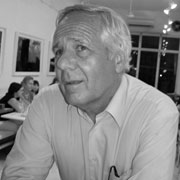
Frank M. Mann,
|
|
| |
|
|
|
Exocitism and Cross-Culturalism
The topic of this year’s festival has become an increasingly popular one during the last two decades in the international music scene. And even in the realm of the “cross-cultural-reluctant” German music culture, organisers, musicologists, radio stations, including educational institutions have learned that in a global world, one can not avoid or neglect the contact and mutual influence of cultures.
As a matter of fact cultural exchange is as old as mankind, because from its very beginning, ethnic groups have met once in a while. Those contacts did not always happen voluntarily but often in the name of ruthless imperialism using military or other forces. Nevertheless, such negative circumstances in some cases do not justify the neglecting of that reality itself. For example, the Dutch once defeated, murdered and colonised thousands of Indonesian people, but decades later, they also admired and cultivated their cultures, yat they even learned a lot of it as did the Indonesians. Therefore such a festival has an important task to demonstrate how artists from different cultures have dealt seriously with that problem. Apparently there is not a single solution. Rather one discovers numerous ways and alternatives of which the whole program may only present a few exemplary insights.
Going back in European music history, one has to admit that European music culture has been significantly influenced by other music cultures, namely the Arabian one via Spain during the Middle Ages. In the Renaissance period those influences were less important, but in the late Baroque era and the early classical period with its splendid court culture, it became even a fashion to become “exotic”.
At the end of the 19th century, the overall attitude towards other cultures also started to change, seen from another point of view. Many European composers, especially from the border countries, tried to revive their respective folk musics as new fresh sources for their own new compositions. This happened with Modest Mussorgsky in Russia, or Isaac Albeniz in Spain for example.
Increasingly also colonial nations started to promote indigenous cultures instead of destroying them, although the missionaries still worked against such tendencies almost up to the present time. This was also the birth of a new scientific field called ethnomusicology, and the most famous sign of a change in attitude were the famous world exhibitions in Paris, especially the one in 1889 with music groups from numerous cultures of the world.
During that time, the term “world music” or “cross-cultural music” had been created by the German musicologist Georg Capellen (1869 – 1934).
The term „exotism“ itself was originally used in natural sciences to name strange plants or animals and was later used in the musical Romantic period (19th century) as a modern fashion in arts.
Increasingly also colonial nations started to promote indigenous cultures instead of destroying them, although the missionaries still worked against such tendencies almost up to the present time. This was also the birth of a new scientific field called ethnomusicology, and the most famous sign of a change in attitude were the famous world exhibitions in Paris, especially the one in 1889 with music groups from numerous cultures of the world.
During that time, the term “world music” or “cross-cultural music” had been created by the German musicologist Georg Capellen (1869 – 1934).
Today only an open attitude of primary acceptance and in-depth study of the “Other” may lead to a universal plurality of music forms. We may then see not an international new music where a Japanese composer sounds like a German colleague. But we also should not “ethnizise” a Japanese that he has to sound “Japanese”, whatever that would be (perhaps mainly our understanding of “Japaneseness”!). Our future is an increasingly differentiated plurality in arts, and this festival should be a small contribution to it.
Prof.Dieter Mack University of Music Luebeck
|
|
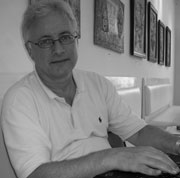
Prof.Dieter Mack
University of Music Luebeck
|
|
| |
|
|
|
|
